

Everything you need to know about the digital SAT format, the Bluebook testing app, adaptive sections, and how to prepare effectively.
The SAT has transitioned fully to a digital format, changing how students take the test and how they should prepare. Understanding the structure of the digital SAT is the first step toward a confident test day.
What Is the Digital SAT?
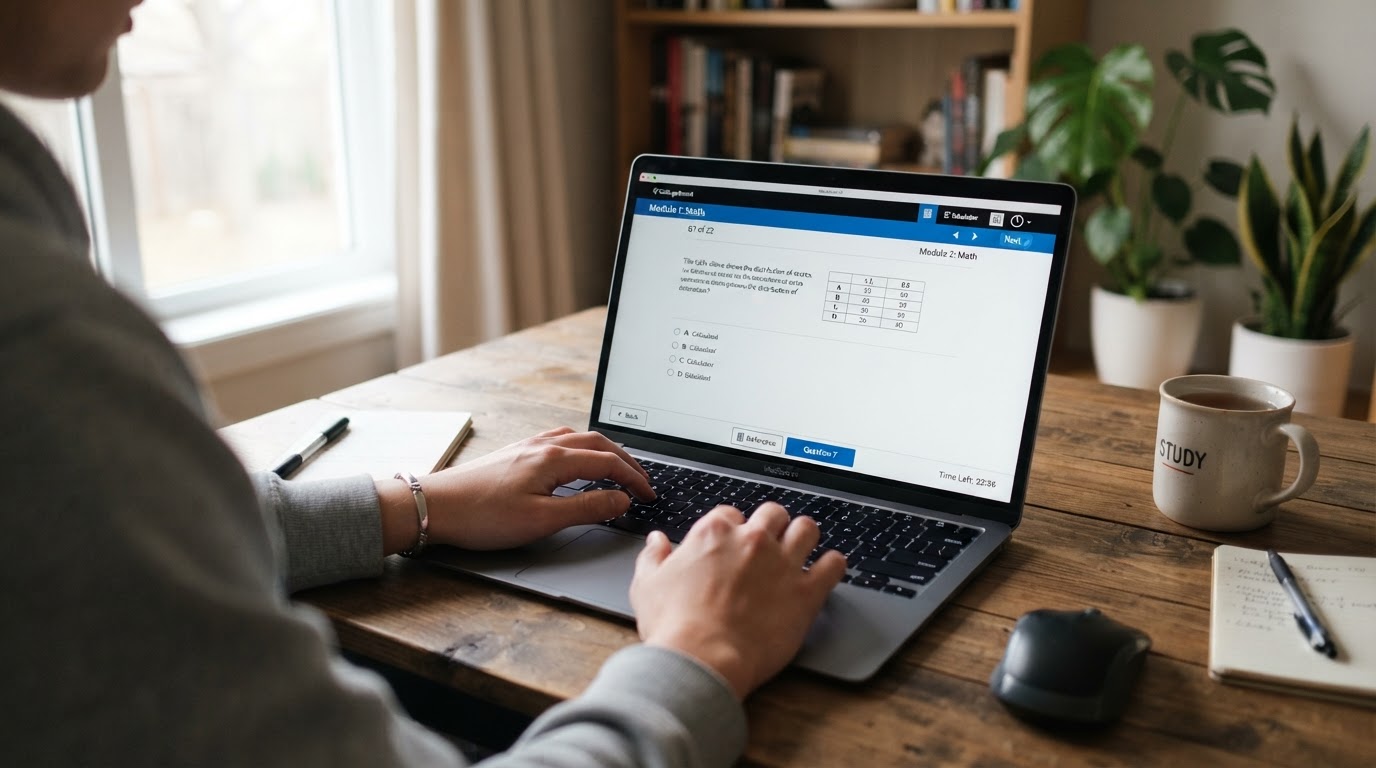
The digital SAT is administered on a laptop or tablet through the College Board's Bluebook testing application. The exam is shorter than the previous paper version and is section-adaptive, meaning your performance on the first module determines the difficulty of the second.
Key Features of the Digital Format
- Two sections: Reading and Writing, and Math
- Each section is divided into two adaptive modules
- A built-in graphing calculator (Desmos) is available throughout the Math section
- The test takes about two hours and fourteen minutes
- Scores are returned faster than with the paper SAT
How Adaptive Testing Works
The digital SAT uses a section-adaptive model. Your performance on the first module of each section determines whether your second module is easier or harder. A harder second module offers the opportunity to earn a higher score, so strong performance early in each section matters.
Preparing with Bluebook
Bluebook is the official testing application. Practicing in Bluebook helps you become familiar with the interface, the on-screen timer, the Desmos calculator, and the annotation tools. Working with a private tutor who understands the digital format can help you use these tools strategically.
Finding the Right Tutor
Look for a tutor or tutoring company that specifically references digital SAT preparation and Bluebook practice. Browse our Digital SAT Preparation category to find providers who specialize in this format.
Related Articles in Digital SAT Preparation
 Advertisement